
Best Managed WordPress Hosting for Small Business: Seven Official Paths, Plus One Nearby Desk
Disclosure: This post contains affiliate links. If you buy through them, we may earn a commission at no extra cost to you. How we make money.
This guide to the best managed WordPress hosting for small business is a desk map, not a trophy list. I am comparing WP Engine, Cloudways, Kinsta, Pressable, SiteGround, Hosting.com, Hostinger, and Rocket.net, using official product and pricing pages. This is not a timed speed test, and it is not a claim that one host wins every small-business site.
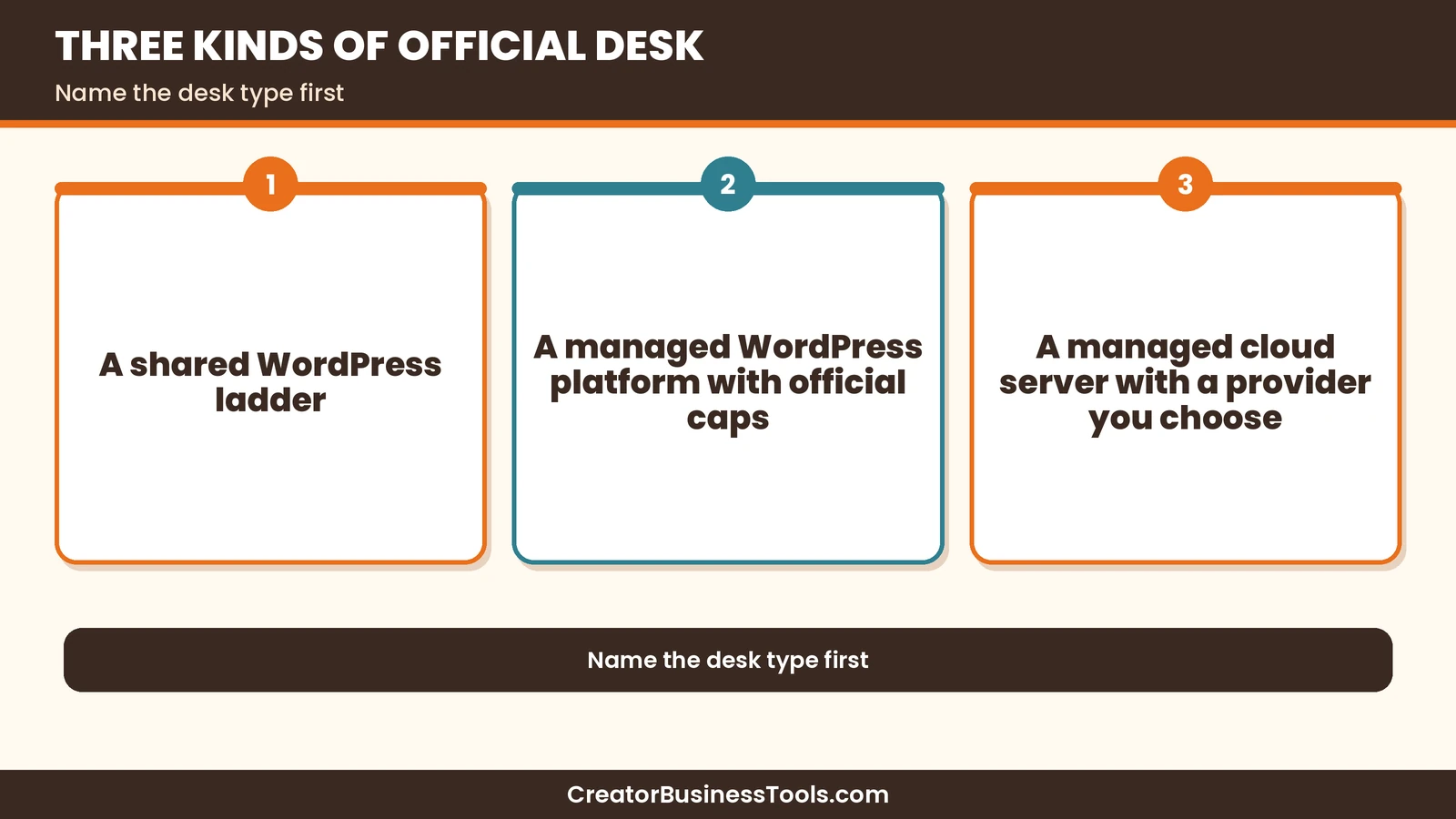
A small-business WordPress site still needs a first job: a shared beginner path, a managed WordPress platform, or a managed cloud server you can resize. The best managed WordPress hosting for small business is the official desk that matches that job.
The reader’s problem: “managed” is not one product
“Managed WordPress” can mean a platform with official capacity rungs, a visit-based plan family, or a managed layer on a cloud provider you choose. Shared WordPress hosts also sell managed-feeling onboarding, with a simpler first hour. If you treat all eight names as the same product, the comparison collapses into a first number on a pricing page.
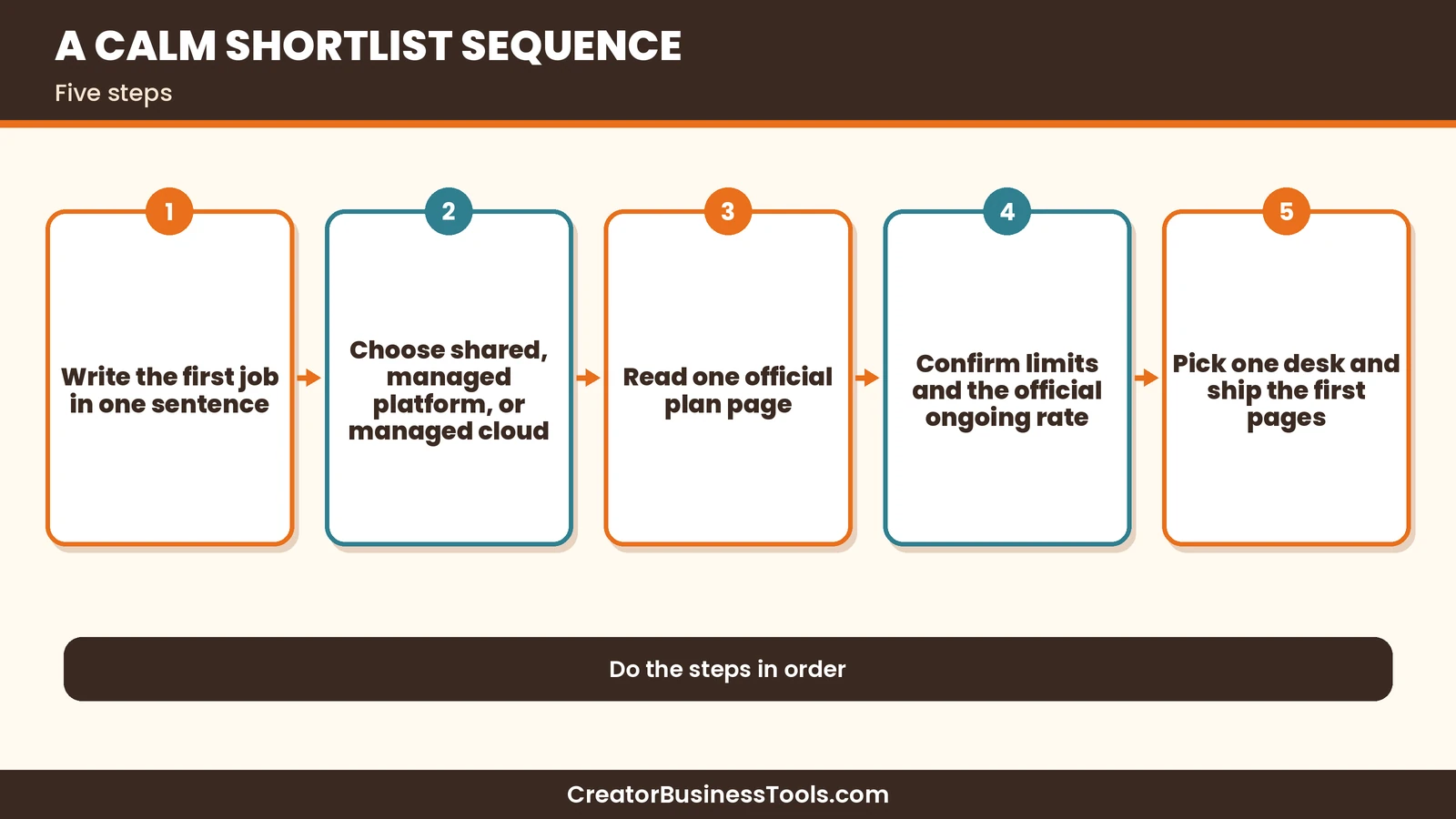
Write the first job in one sentence before you open eight official tabs.
Three criteria for this shortlist
Criterion one: the official unit you buy
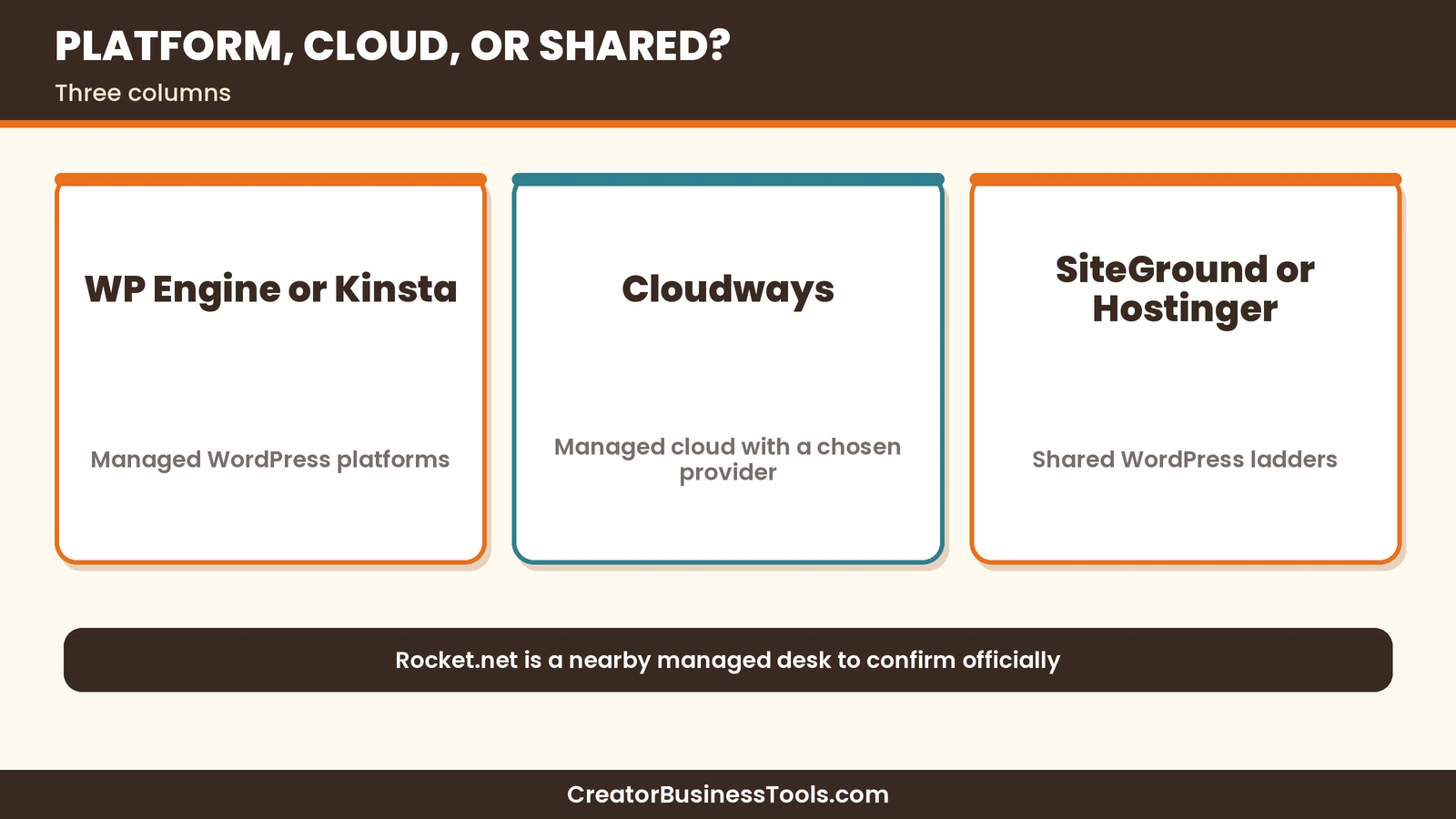
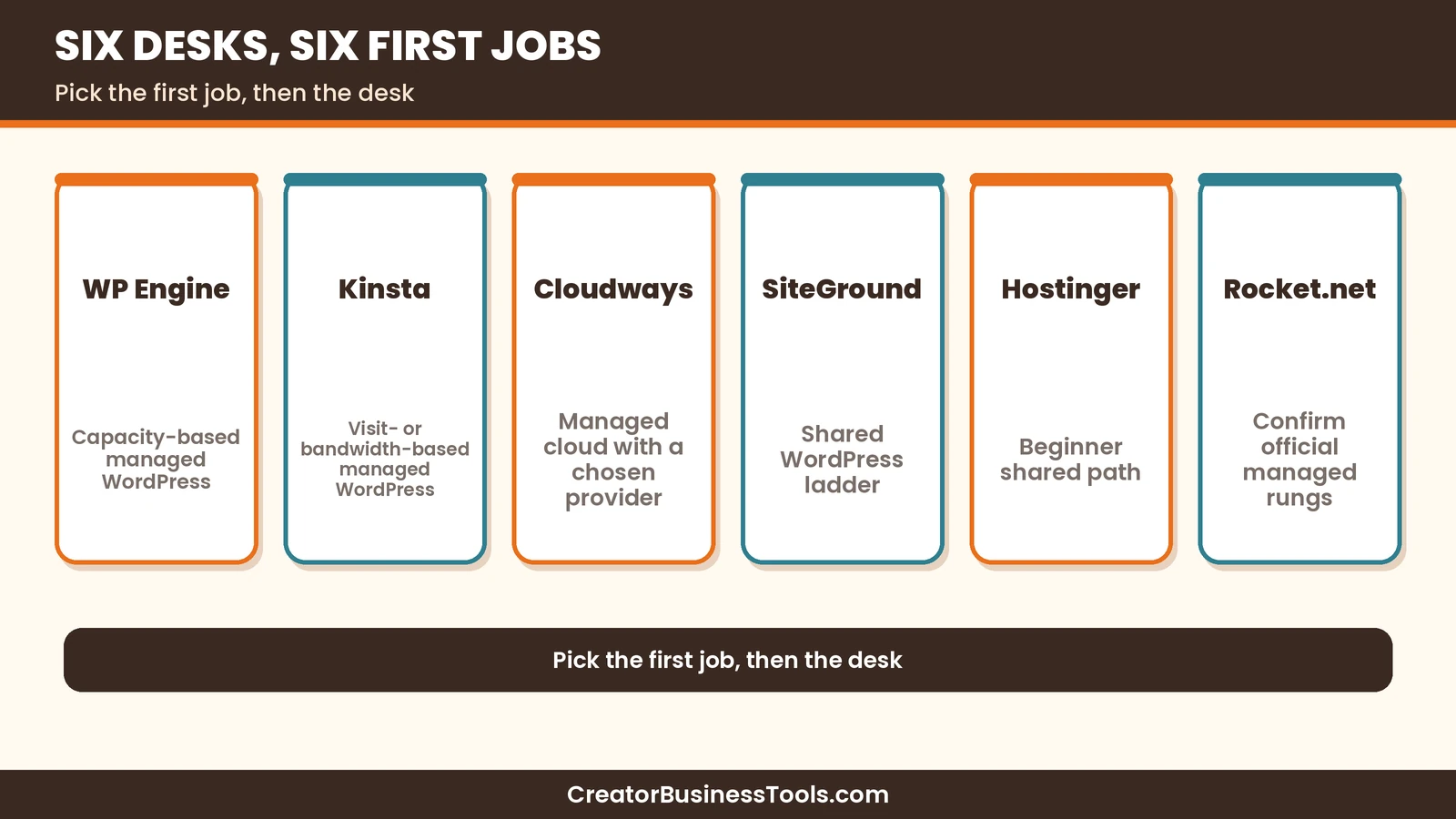
Look at what the official page is actually selling: a shared rung, a capacity or visit plan, or a server size. WP Engine and Kinsta are managed WordPress platforms. Cloudways is a managed cloud desk. SiteGround and Hostinger are shared WordPress paths that many small sites still start on. Rocket.net is another official managed WordPress host to confirm on its own pricing page.
Criterion two: official limits you can confirm
Look for official caps on sites, visits or bandwidth, storage, and backups. A shared rung and a managed platform do not use the same kind of limit.
Criterion three: the first hour you are willing to do
A shared host asks you to pick a plan and follow official onboarding. A managed platform asks you to match official capacity or visits. A Flexible cloud desk asks you to pick a provider and a server size. The first hour is part of the choice.
Best managed WordPress hosting for small business, at a glance
| Product | Best for | Key strength | Drawback | Price tier |
|---|---|---|---|---|
| WP Engine | A small-business site that wants official capacity rungs | Official Essential, Business, and Enterprise desks, with backups, staging, and a CDN on the platform | Confirm official capacity on the current public page | Mid-range to premium official rungs |
| Cloudways | A site that wants a managed cloud server and a provider you can choose | Official Flexible path, plus a separate Autonomous WordPress path | You still size a server; I did not run a speed test | Budget to premium rungs, depending on provider and size |
| Kinsta | A site that wants official installs plus a visit or bandwidth cap | Official plan family with clear install counts and visit or bandwidth rungs | Official pricing pages can show a first figure that is not the ongoing rate | Mid-range to premium official rungs |
| Pressable | A site that wants a managed WordPress desk on Automattic’s WP Cloud platform | Official Signature ladder by installs, visits, and storage, with staging and a sandbox for each install | Official visit and storage overages can sit on top of the plan card; Premium is a different desk | Mid-range to premium official rungs |
| SiteGround | A small site that wants a shared WordPress ladder | Official StartUp, GrowBig, and GoGeek rungs | Confirm the official standard or renewal rate, not only the first displayed figure | Budget to mid-range official standard rungs |
| Hosting.com | A small site that wants a shared host with a published LiteSpeed, NVMe, and EPYC stack | Official Starter, Pro, and Max shared rungs with published resource figures and daily backups | It is not a managed WordPress platform; I did not run a speed test; confirm the standard or renewal rate | Budget to mid-range official rungs, after you confirm the ongoing rate |
| Hostinger | A first small-business blog on a beginner shared path | Official WordPress onboarding and a published first-post guide | It is not a managed WordPress platform in the WP Engine or Kinsta sense | Budget to mid-range official renewal rungs |
| Rocket.net | A nearby official managed WordPress desk to confirm on its own page | Another managed WordPress option in the same conversation as Kinsta | I did not re-read a full official plan chart for this draft, so confirm the live page | Confirm official rungs on the official pricing page |
For a Kinsta-led platform comparison, see Kinsta vs WP Engine. For shared-host context, see the published SiteGround review and Hostinger vs SiteGround.
WP Engine
What it is
WP Engine is a managed WordPress hosting platform. Official public pages describe Essential plans with a set number of sites, visits, storage, and bandwidth, plus Business and Enterprise desks. Official Essential materials describe daily backups, a CDN, automatic WordPress and PHP updates, one-click staging, SSL, and 24/7 chat.
Pros of WP Engine
- Official Essential ladder is easy to map to a small-business site
- Official pages describe backups, staging, a CDN, and managed updates
- Business and Enterprise exist as official higher desks
- A published Kinsta comparison already exists if you want the other lead
Cons of WP Engine
- Official Essential is a shared environment, according to official materials
- Some tools sit on official add-ons
- I did not launch a site or measure performance
- It can be more desk than a first blog needs
Cloudways
What it is
Cloudways is a managed cloud hosting platform. Official Flexible pages describe a path where you choose a provider and a server size. Official pages also describe Autonomous: a one-site WordPress path with autoscaling. Those are different desks.
Pros of Cloudways
- Official Flexible path lets you choose the provider and the server size
- Official pages say you can launch more than one application on a Flexible server, within that server’s resources
- Official materials describe staging, SSL, backups, and vertical scaling
- Autonomous is a separate official path for one-site autoscaling
Cons of Cloudways
- The first hour is heavier than a shared WordPress wizard
- AWS and Google Cloud prices can vary by region
- Some official Flexible add-ons are priced separately
- I did not launch a server for this shortlist
Kinsta
What it is
Kinsta officially sells managed WordPress plans with a set number of installs and a visit- or bandwidth-based rung. Official pages describe a CDN, DDoS protection, daily backups, staging, SSL, an APM tool, and 24/7 support on the paid plans.
Pros of Kinsta
- Official plan family is easy to read by installs and visits or bandwidth
- Official pages describe staging, backups, a CDN, and support
- Official materials describe migrations as part of the desk
- The published Kinsta vs WP Engine guide can sit next to this shortlist
Cons of Kinsta
- Official pricing pages can show a first figure that is not the ongoing official rate
- I did not run a speed test or a migration
- A first blog may still be happier on a shared ladder
Pressable
What it is
Pressable is a managed WordPress host on Automattic’s official WP Cloud platform. Official Signature pages describe a plan family from one WordPress install up to a large official bundle, with a visit cap and a storage cap on each rung. Official materials also describe a staging site and a sandbox site for each install, dedicated PHP workers, hourly and daily backups, and 24/7 support. Official Premium pages describe a separate, higher desk for a single site.
Pros of Pressable
- Official Signature ladder is easy to map by installs, visits, and storage
- Official pages describe staging and sandbox environments
- Official materials describe hourly and daily backups plus dedicated PHP workers
Cons of Pressable
- I did not launch a site or measure performance
- Official visit and storage overages can sit on top of the plan card
- Official Premium is a different desk, not only a larger Signature number
SiteGround
What it is
SiteGround officially sells shared WordPress hosting on a three-rung ladder: StartUp, GrowBig, and GoGeek. Official StartUp is one site. Official GrowBig and GoGeek allow more sites and add tools such as staging.
Pros of SiteGround
- Official three-rung ladder is easy to explain to a small team
- Official StartUp is a simple one-site first plan
- Official GrowBig adds tools such as staging
- A published review already maps this desk in more detail
Cons of SiteGround
- It is not a managed WordPress platform in the WP Engine or Kinsta sense
- The first figure on a pricing page may not be the official standard or renewal rate
- I did not run a speed test, so I am not repeating third-party speed claims
Hosting.com
What it is
Hosting.com is the official brand of the host formerly known as A2 Hosting. Official shared-hosting pages describe a Starter, Pro, and Max ladder with a published LiteSpeed, NVMe, and AMD EPYC stack, plus daily backups, SSL, and 24/7 in-house support. A separate Managed Hosting for WordPress product exists on the official site; it is not the same product as the shared ladder.
Pros of Hosting.com
- Official shared pages describe the same published performance stack across the shared rungs
- Official comparison materials publish RAM, vCPU, and I/O figures
- Official pages describe daily backups, SSL, and email on the shared desk
Cons of Hosting.com
- I did not measure speed on a test site, so I cannot give a lab number
- The first figure on a pricing page may not be the official standard or renewal rate
- A separate managed WordPress product is easy to mix up with the shared plans
Hostinger
What it is
Hostinger is a beginner-friendly shared WordPress path. Official onboarding is built around a first site, and a published How to Start a Blog with Hostinger guide already covers that first hour.
Pros of Hostinger
- Official first-site onboarding is short compared with a cloud server
- A published beginner walkthrough already exists
- Official plan rungs can fit a first small-business blog
- It is an honest exit if a managed platform is more desk than you need
Cons of Hostinger
- It is not a pick-your-provider cloud desk
- It is not a visit-based managed WordPress platform
- Confirm official renewal rates, not only the first displayed figure
- I am reusing official plan-shape notes, not a new lab test
Rocket.net, in brief
Rocket.net is another official managed WordPress host in the same conversation as Kinsta. I am including it so this shortlist stays honest about nearby desks. I did not re-read a full official plan chart for this draft, so I am not restating plan names or rungs here. Confirm official limits, support, and the official rate on the live pricing page before you treat it as a finalist.
Best-use-case recommendations
| Situation | Pick | Why |
|---|---|---|
| You want official site, visit, and storage caps on a managed platform | WP Engine Essential | Official capacity ladder |
| You think in installs plus visits or bandwidth | Kinsta | Official Kinsta plan family |
| You want to choose the cloud provider under the site | Cloudways Flexible | Official provider-and-size path |
| You want official autoscaling for one WordPress site | Cloudways Autonomous | Official one-site desk, after you read the quotas |
| You want Automattic’s WP Cloud platform with staging and a sandbox | Pressable Signature | Official installs, visits, and storage ladder |
| You want a shared WordPress ladder | SiteGround | Official StartUp to GoGeek story |
| You want a shared host with a published LiteSpeed, NVMe, and EPYC stack | Hosting.com Starter, Pro, or Max | Official shared ladder with published resources |
| You want the shortest first-post path | Hostinger | Official onboarding plus a published guide |
| You want another official managed WordPress desk to compare | Rocket.net | Confirm the live official page |
Pricing structure, without the noise
Each official desk uses a different unit. WP Engine Essential follows official capacity. Kinsta follows official installs and a visit or bandwidth cap. Cloudways Flexible follows a provider and a server size. SiteGround and Hostinger follow shared official rungs. I am not restating dollar amounts here. Budget the official rate you will actually pay, not only the first figure on the page.
A domain and professional email can still sit outside every hosting card in this table. Write those costs next to the official plan.
When a managed platform is the right shortlist
Choose WP Engine or Kinsta if WordPress is the long path and you want official caps, staging, backups, and a managed update story. Start with the official map you can explain in one sentence. For the Kinsta-led written comparison, use the published guide. For the WP Engine-led comparison, use the companion draft in this batch only after it is published; until then, use official pages and the published Kinsta-led piece.
Choose Cloudways if the first question is the provider under the site. Choose SiteGround or Hostinger if the first question is a shared hour and a first post.
Support, migrations, and what a small team still has to do
Official pages on the managed platforms describe backups, staging, a CDN, SSL, and 24/7 support. Official Cloudways pages describe 24/7 support, staging, SSL, and a managed migration path for the first site. Official shared hosts describe their own support and backup rules on each rung.
I did not open a support ticket or watch a migration, so I cannot grade the experience. A small team still has to write pages, keep plugins tidy, and hold a current backup before any move. Official hosting cannot do that work for you.
What this shortlist cannot tell you
This guide cannot tell you which host will feel faster for your theme and plugins. I did not measure TTFB or run a plugin-heavy test site. Official marketing also cannot write your product pages.
The phrase “best managed WordPress hosting for small business” is a search question. The honest answer is a matched official desk, not a single winner for every shop.
Questions to confirm on official pages
- The official unit: shared rung, capacity plan, visit plan, or server size
- Official caps on sites, visits or bandwidth, and storage
- Backup, staging, and support rules
- Which tools are included, and which sit on add-ons
- The official rate you will actually pay
- Whether a domain or email is separate
- Rocket.net official plan names and limits, if that desk is a finalist
Mistakes I would avoid
- Treating six official desks as one product
- Budgeting from the first figure on a pricing page
- Buying a managed platform when you wanted a first-post wizard
- Buying a shared rung when you already needed official visit caps
- Picking a Cloudways size without reading official bandwidth and backup rules
- Repeating official speed claims as if I had tested them
- Leaving a live site without a current backup before a move
A small-business budget that includes more than hosting
The official hosting rate is only one line. A domain, professional email, a backup export you control, and time to write pages all sit next to that line. A mid-range managed platform can still be the right desk if the site already needs official caps and staging. A budget shared rung can still be the right desk if the first job is a handful of pages and a calm first hour.
Write the full first-month list before you treat any official card as the whole cost of getting online.
How I would choose from official pages
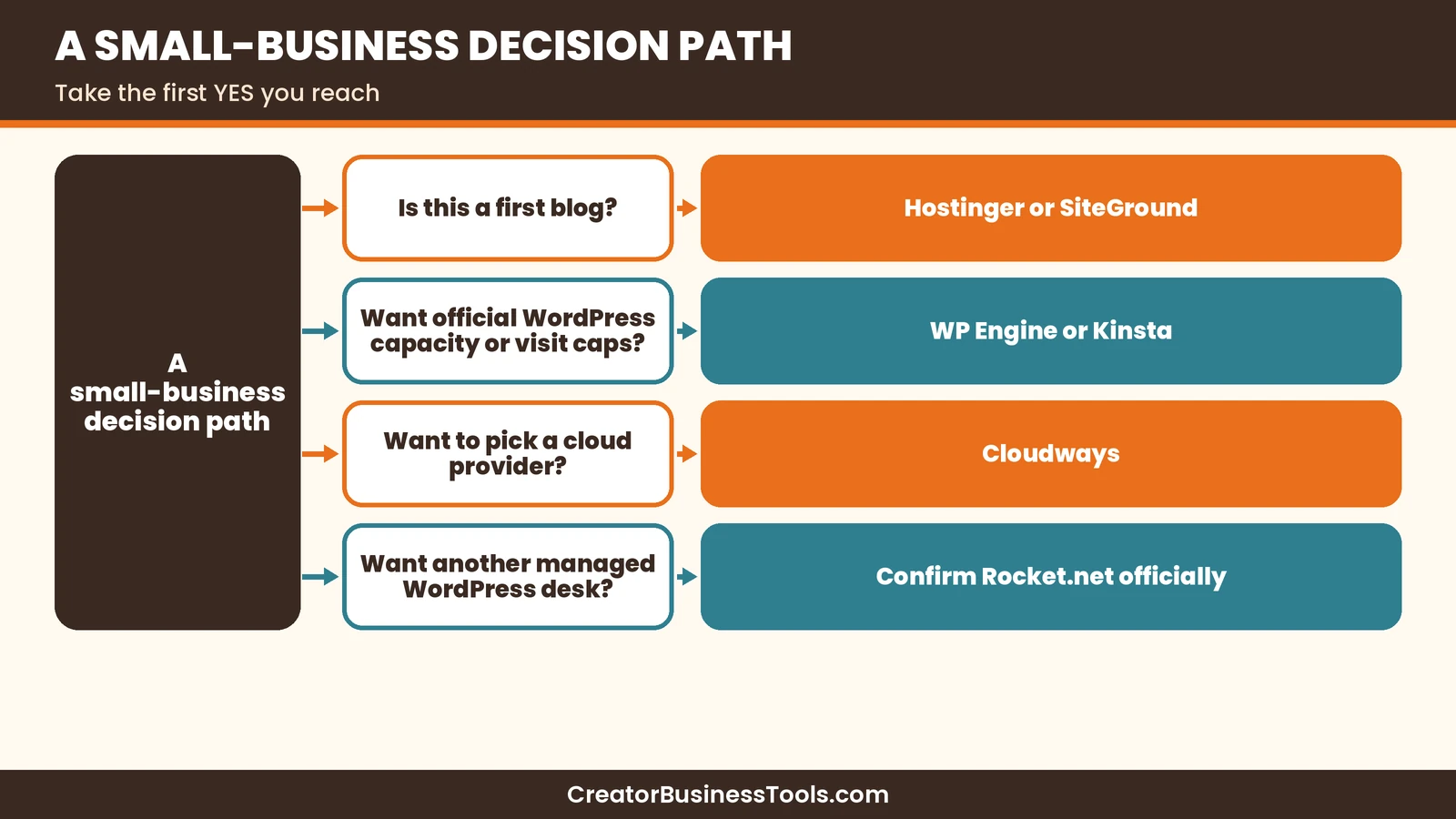
I am writing this shortlist from official product and pricing pages, not from a launched test site. If I were choosing from those pages alone, I would write the first job in one sentence. A first blog would go to Hostinger or SiteGround. A managed WordPress site I could map to official caps would go to WP Engine or Kinsta. A site that needed a named provider would go to Cloudways. I would read Rocket.net only if I still wanted a third official managed platform after that cut.
My honest take
The best managed WordPress hosting for small business is the official desk that matches the first job. WP Engine and Kinsta are the managed platforms. Cloudways is the managed cloud desk. SiteGround and Hostinger are the shared ladders that many small sites should still consider. Rocket.net is a nearby official desk to confirm, not a headline I can write without a fresh official read.
I would start with the first hour I am willing to do. I would not start with a “best” label.
FAQ
What is the best managed WordPress hosting for a small business?
There is no single official winner for every site. If you want official capacity rungs, start with WP Engine. If you want official installs plus a visit or bandwidth cap, start with Kinsta. If you want a named cloud provider, start with Cloudways. If you want a shared first hour, start with SiteGround or Hostinger.
Do I need a managed platform, or is a shared host enough?
A shared host can be enough for a first small-business blog. A managed platform fits when you want official caps, a managed update story, and a desk built around WordPress as the long path. Write the first job before you buy the heavier desk.
Should I include Rocket.net in my shortlist?
You can, if you want another official managed WordPress desk. Confirm official plan names, limits, and the official rate on the live page. I am not restating those details in this draft.
Where should I start if I also want a first-post walkthrough?
Start with How to Start a Blog with Hostinger if the first post is the job. Come back to this shortlist when the site needs a managed platform or a named cloud provider.
Get the free small-business hosting checklist
Free checklist: Get our free Small-Business Hosting Checklist — for choosing between a shared host, a managed WordPress platform, and a managed cloud desk, including official limits and the ongoing rate. Contact us to request a copy.
Conclusion: match the official desk to the first job
The best managed WordPress hosting for small business is a match, not a medal. Start with WP Engine or Kinsta if you want a managed WordPress platform with official caps. Start with Cloudways if you want a provider and a server you can resize. Start with SiteGround or Hostinger if you want a shared first hour. Confirm official limits, budget the official rate you will actually pay, and let the first published pages tell you whether the desk fits.