
Hosting.com Review (formerly A2 Hosting): Is It Fast Enough for Bloggers?
Disclosure: This post contains affiliate links. If you buy through them, we may earn a commission at no extra cost to you. How we make money.
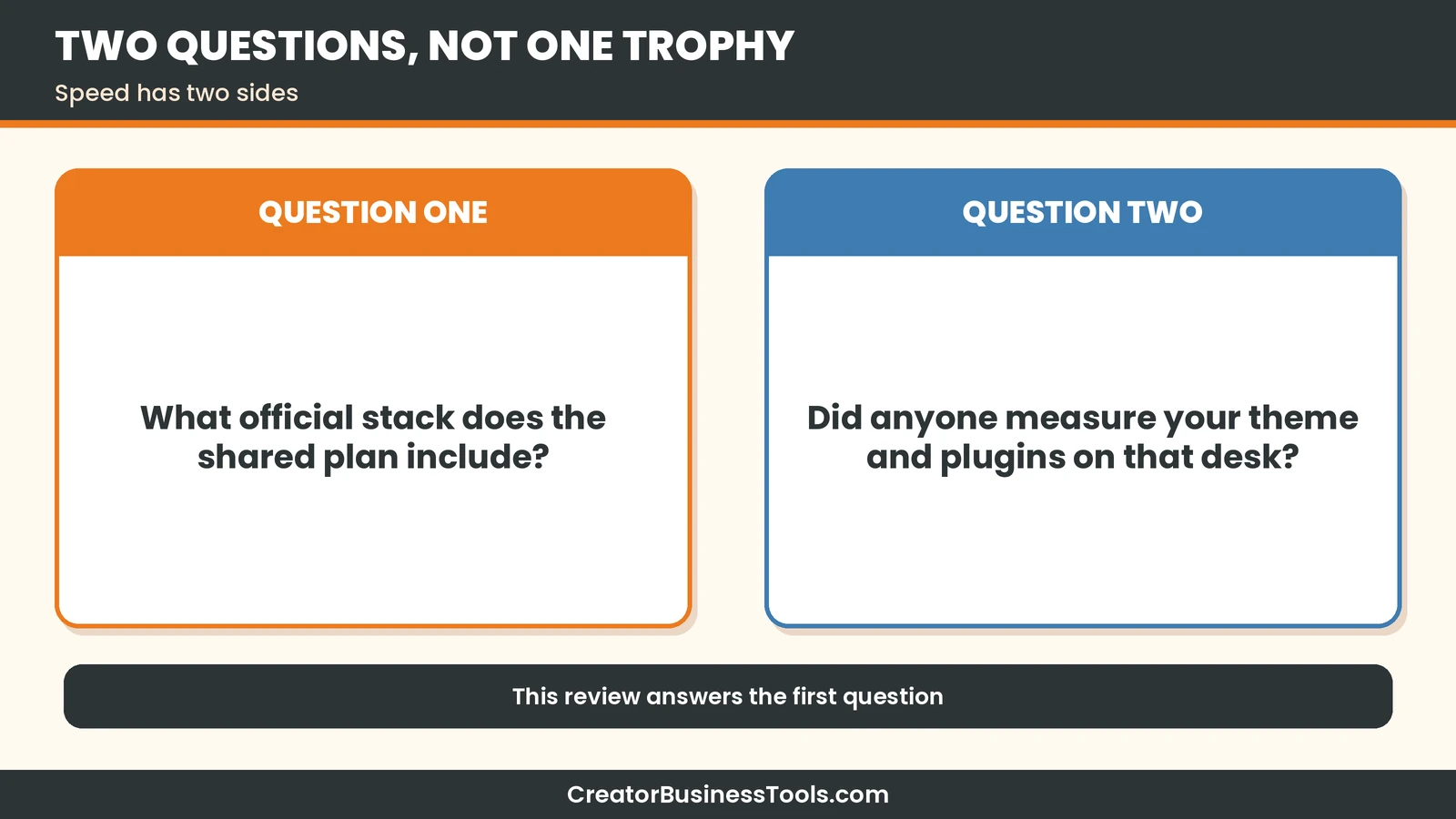
This Hosting.com review (formerly A2 Hosting) is for bloggers who want a shared WordPress host with a published performance stack, and who are asking a practical question: is it fast enough for a real blog? I am comparing Hosting.com with SiteGround, Hostinger, and Kinsta, using official product and pricing pages. This is a map of official plan shape, not a timed speed test.
The reader’s problem: speed claims, and a blog that still has to load
A new blog often starts on a shared host. Official pages talk about caching, NVMe storage, and fast CPUs. Those details matter. They are not the same thing as a test I ran on your theme, your plugins, and your audience.
The useful first job is to read the official desk: which plan, which site cap, which published resources, and which tools sit on that rung. Then decide whether a shared host is the right first hour, or whether a managed WordPress platform is a better fit.
Three criteria for this Hosting.com review
Criterion one: the official desk you will live in
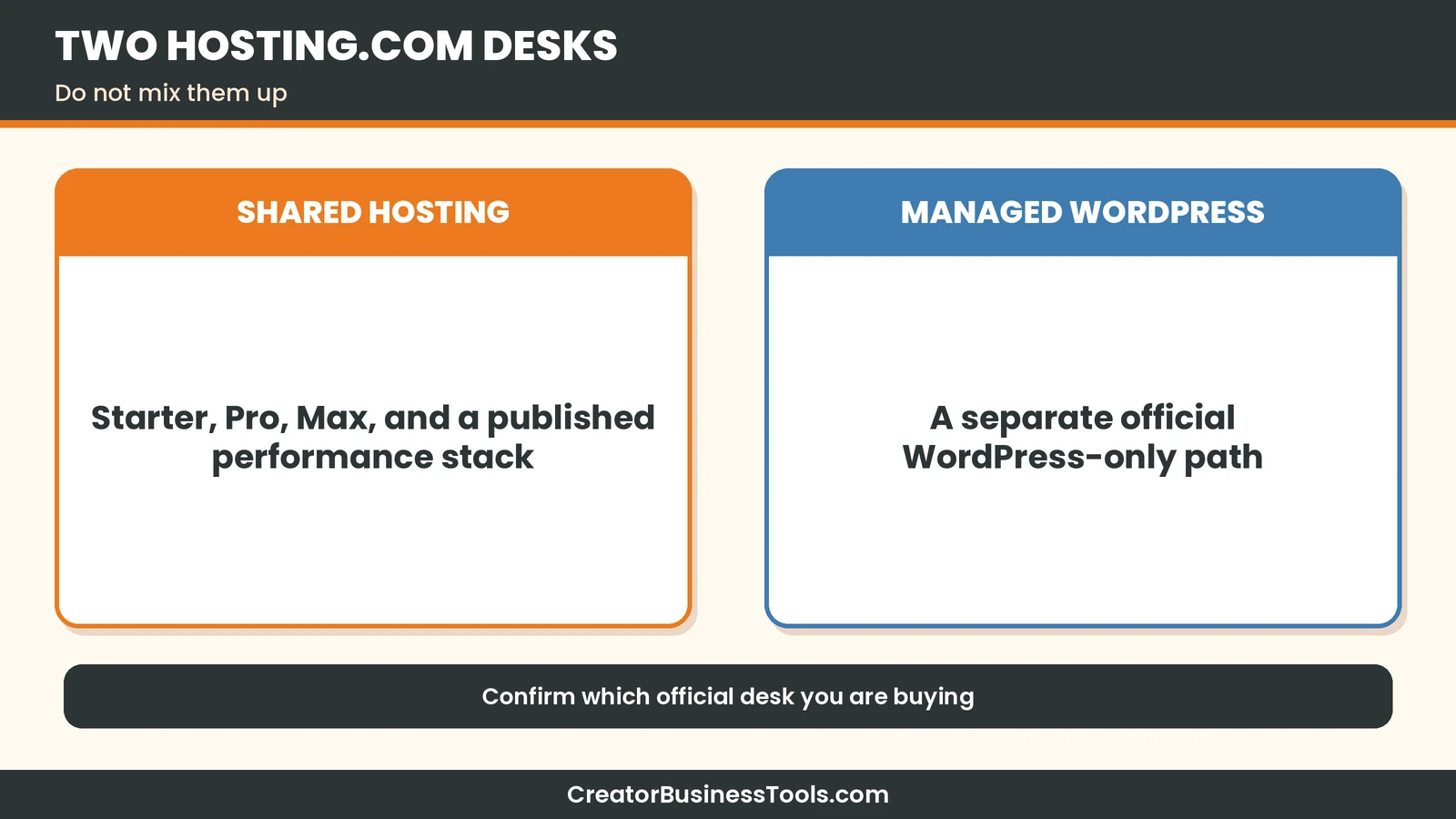
Official Hosting.com pages describe shared plans under the Hosting.com brand — the service formerly known as A2 Hosting — plus a separate managed WordPress product. This review starts with the shared ladder, because that is the usual first desk for a blog.
Criterion two: official limits you can confirm
Look for official caps on sites, storage, and published server resources. Official comparison pages also list RAM, vCPU, and I/O figures. Confirm those numbers on the live official page, because public plan cards and comparison tables can describe the ladder in slightly different ways.
Criterion three: the first hour you are willing to do
A shared host asks you to pick a plan and follow official onboarding. A managed WordPress platform asks you to match official visits or capacity. If you wanted the shortest beginner walkthrough, a published shared-host guide may still be the calmer path.
Hosting.com review, at a glance
| Product | Best for | Key strength | Drawback | Price tier |
|---|---|---|---|---|
| Hosting.com | Bloggers who want a shared host with a published LiteSpeed, NVMe, and EPYC stack on every official shared rung | Official shared plans with published resource figures, daily backups, and in-house support | I did not run a speed test; confirm official site caps and the standard or renewal rate | Budget to mid-range official rungs, after you confirm the ongoing rate |
| SiteGround | Beginners who want a shared WordPress ladder with a clear first rung | Official StartUp, GrowBig, and GoGeek rungs, with a simple site-count story | Confirm the official standard or renewal rate, not only the first displayed figure | Budget to mid-range official standard rungs |
| Hostinger | A simple first blog on a beginner-friendly shared path | Official WordPress onboarding and a published first-post guide | It is not a visit-based managed WordPress desk | Budget official renewal rungs |
| Kinsta | Sites that want a visit- or bandwidth-based managed WordPress desk | Official plan family with install counts and visit or bandwidth rungs | It is a heavier first hour than a shared beginner plan | Mid-range to premium official rungs |
For a longer look at SiteGround, see the published SiteGround review. For two shared beginner paths, see Hostinger vs SiteGround.
Hosting.com
What it is
Hosting.com is a web host whose official brand is Hosting.com, formerly A2 Hosting. Official shared-hosting pages describe a Starter, Pro, and Max ladder, with a published performance stack — LiteSpeed caching, NVMe storage, and AMD EPYC CPUs — on those shared plans. Official materials also describe daily backups, a web application firewall, SSL, email, and 24/7 in-house support.
Official pages also describe a separate Managed Hosting for WordPress path, with its own official feature list. That is not the same product as the shared ladder. If you only needed a first blog, start by reading the shared plan caps, not the specialist WordPress marketing page.
Pros of Hosting.com
- Official shared pages describe LiteSpeed, NVMe, and AMD EPYC on the shared plans, not only on a top rung
- Official comparison materials publish RAM, vCPU, and I/O figures for the plan family
- Official pages describe daily backups, a firewall, SSL, and email on the shared desk
- Official materials describe a path to move up a plan, or later to a server of your own, on the same platform
- 24/7 in-house support sits on the official story
Cons of Hosting.com
- I did not measure TTFB or page speed on a test blog, so I cannot answer “fast enough” with a lab number
- Official public pages do not all describe the site-count ladder in the same way; confirm the live caps
- The first figure on a pricing page may not be the official standard or renewal rate
- There is no lasting official free plan on the public pricing pages I read
- A separate managed WordPress product can be easy to mix up with the shared plans
SiteGround, Hostinger, and Kinsta, in brief
SiteGround officially sells a three-rung WordPress hosting ladder: StartUp, GrowBig, and GoGeek. Official StartUp is one site. Official GrowBig and GoGeek allow more sites and add tools such as staging. Confirm the official standard or renewal rate, not only the first displayed figure. I am not repeating official third-party speed comparisons as if I had run them.
Hostinger is the nearby beginner shared path. If the first job is to publish a first post, the published How to Start a Blog with Hostinger guide is the shorter walkthrough.
Kinsta officially sells managed WordPress plans with a set number of installs and a visit- or bandwidth-based rung. It is a better fit if you already think in visits, not in a shared site-count ladder. For a Kinsta-led comparison with WP Engine, see Kinsta vs WP Engine.
Best-use-case recommendations
| Situation | Pick | Why |
|---|---|---|
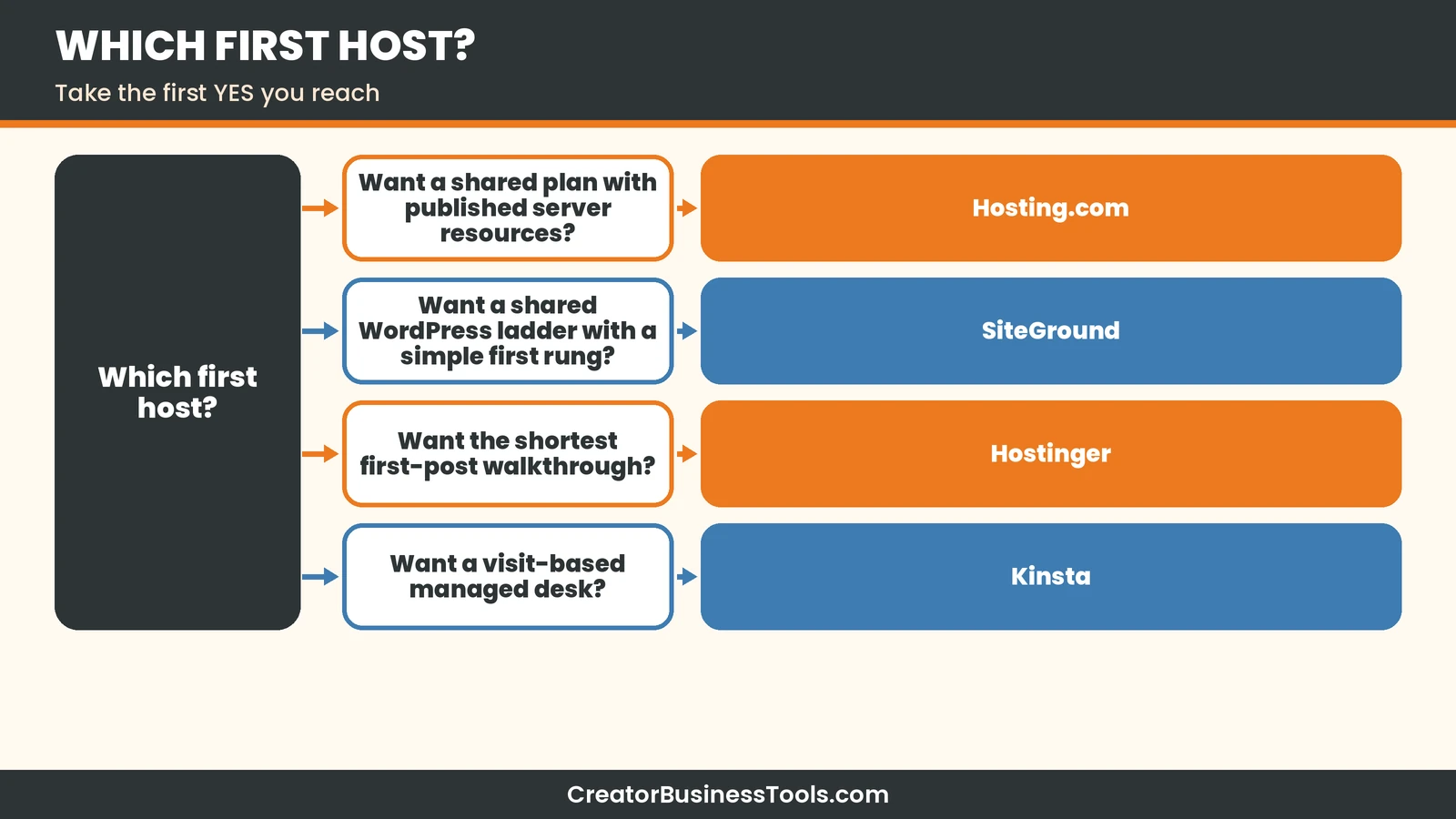
| You want a shared host with a published LiteSpeed and NVMe stack | Hosting.com | Official shared-plan performance story |
| You want a shared WordPress ladder with a simple first rung | SiteGround | Official StartUp to GoGeek story |
| You want the shortest first-post path | Hostinger | Official onboarding plus a published guide |
| You think in visits or bandwidth, and want a managed WordPress desk | Kinsta | Official install-and-visit (or bandwidth) rungs |
| You are comparing two shared beginner hosts only | See Hostinger vs SiteGround | That guide already covers that job |
Pricing structure, without the noise
Hosting.com shared pricing follows official Starter, Pro, and Max rungs. Official pages can show a first figure that is not the long-term rate. Official billing help also describes monthly, annual, and longer terms, with different official rates. I am not restating dollar amounts here. Read the official standard or renewal rate, not only the first figure on the page.
SiteGround, Hostinger, and Kinsta use their own official rungs. Budget the official ongoing rate on every desk in this table.
Is it fast enough for bloggers?
This is the question in the title, and it deserves an honest answer. Official Hosting.com pages describe LiteSpeed, NVMe storage, and AMD EPYC CPUs on the shared plans. Official comparison materials also publish RAM, vCPU, and I/O figures, which is more transparent than a plan that only says “unlimited.”
I did not launch a test blog, migrate a live site, or measure Core Web Vitals. Official marketing cannot tell you how your theme and your plugin list will behave. “Fast enough” depends on the site you actually publish, the region of your readers, and how tightly you keep the WordPress stack.
If speed is the only reason you opened this Hosting.com review, treat the official stack as a starting map, not as a lab result. Measure your own pages after the first posts are live, on the official desk you already chose.
What official shared plans include
Official Starter, Pro, and Max pages describe a shared environment with a set number of sites and a set amount of NVMe storage. Official Pro adds tools such as staging. Official Max adds a higher official resource story and priority support, among other official differences. Confirm the live caps, because official cards and comparison tables can describe the same ladder in different words.
Official pages also describe email and SSL as part of the shared desk, and a managed migration path if you already have a site elsewhere. A domain and some add-ons can still sit outside the first card, depending on the official term you pick. Write those details down next to the plan.
Support, backups, and the work after launch
Official Hosting.com pages describe 24/7 in-house support, plus an assistant on the official desk. Official backups are daily, with a published restore window. I did not open a support ticket, so I cannot grade response quality.
A small blog still has to write posts, keep plugins tidy, and hold a current backup before any move. Official hosting cannot do that writing for you.
When Hosting.com is a good fit
Choose Hosting.com if you want a shared host, you can map your site count to an official Starter, Pro, or Max rung, and you want the official LiteSpeed and NVMe story on that shared desk. Read the official resource figures before you treat the brand name as the whole decision.
It is a weaker fit if you wanted a visit-based managed WordPress platform, or if you only wanted the shortest first-post wizard.
When another desk is a better fit
Choose SiteGround if you want that official three-rung WordPress ladder. Choose Hostinger if the first post is the job. Choose Kinsta if you already want a managed WordPress desk with official visit or bandwidth caps.
Questions to confirm on official pages
- Whether you are looking at shared hosting or Managed Hosting for WordPress
- Official site, storage, and resource caps on Starter, Pro, or Max
- Whether a Plus rung still appears on the page you are reading
- Backup, SSL, email, and staging rules
- The official standard or renewal rate, not only the first displayed figure
- Whether a domain is included on the term you pick
- Visit or capacity caps on Kinsta, if you compare a managed desk
Mistakes I would avoid
- Treating official speed language as a test I ran
- Mixing the shared ladder with the separate managed WordPress product
- Budgeting from the first figure on a pricing page
- Skipping the official site-count cap
- Choosing a managed WordPress platform when you only needed a first blog
- Moving a live site without a current backup and an official migration read
Published resources, and why they matter more than a slogan
Official comparison materials list RAM, vCPU, IOPS, and I/O bandwidth for the Hosting.com plan family. That kind of published cap is useful for a blogger, because a shared plan that only says “unlimited” can still hide a real limit. I am not treating those figures as a speed test. I am treating them as official limits you can read before you buy.
Confirm the live numbers on the official page you will actually use. If a marketing card and a comparison table disagree on site count, trust the checkout page and write the cap down next to your plan name.
If you already have a blog on another shared host, official Hosting.com pages describe a managed migration path. I did not watch a move, so I cannot grade it. Keep a current backup, read the official migration page, and confirm DNS and email details before you change hosts.
A first blog still needs a writing cadence
A published performance stack will not write the first month of posts. If you do not yet have a sentence for the blog, a simpler shared walkthrough may be the better first hour, even if Hosting.com is the desk you prefer later. You can move a site when the writing habit exists. Official pages describe a managed migration path for that later move.
How I would choose from official pages
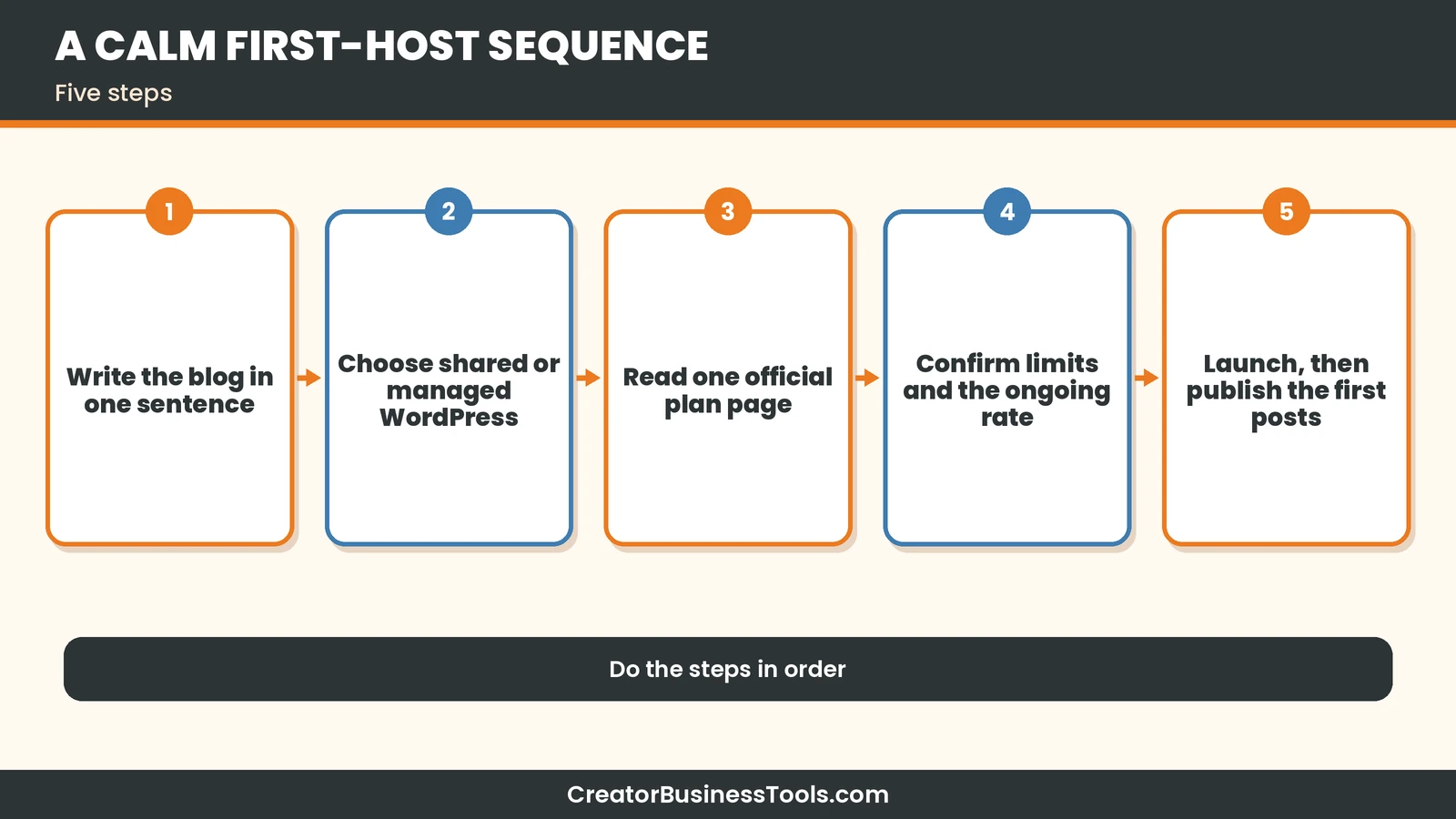
I am writing this Hosting.com review from official product, pricing, and comparison pages, not from a launched test blog. If I were choosing from those pages alone, I would write the blog in one sentence and decide whether a shared host is the right first desk.
If the job was a first blog, I would also look at Hostinger or SiteGround. If the job was a shared host with published resources and a LiteSpeed stack, I would read Hosting.com Starter first, then Pro if I needed staging or more official room. If the job was a visit-based managed desk, I would leave this shared ladder and read Kinsta instead.
What this review cannot tell you
This Hosting.com review cannot tell you which host will feel faster for your theme. I did not measure TTFB. Official customer counts and speed slogans are official claims, not a result I produced.
Stay on one official desk long enough to finish the domain, the SSL path, and the first articles. A second host will still need the same writing.
My honest take
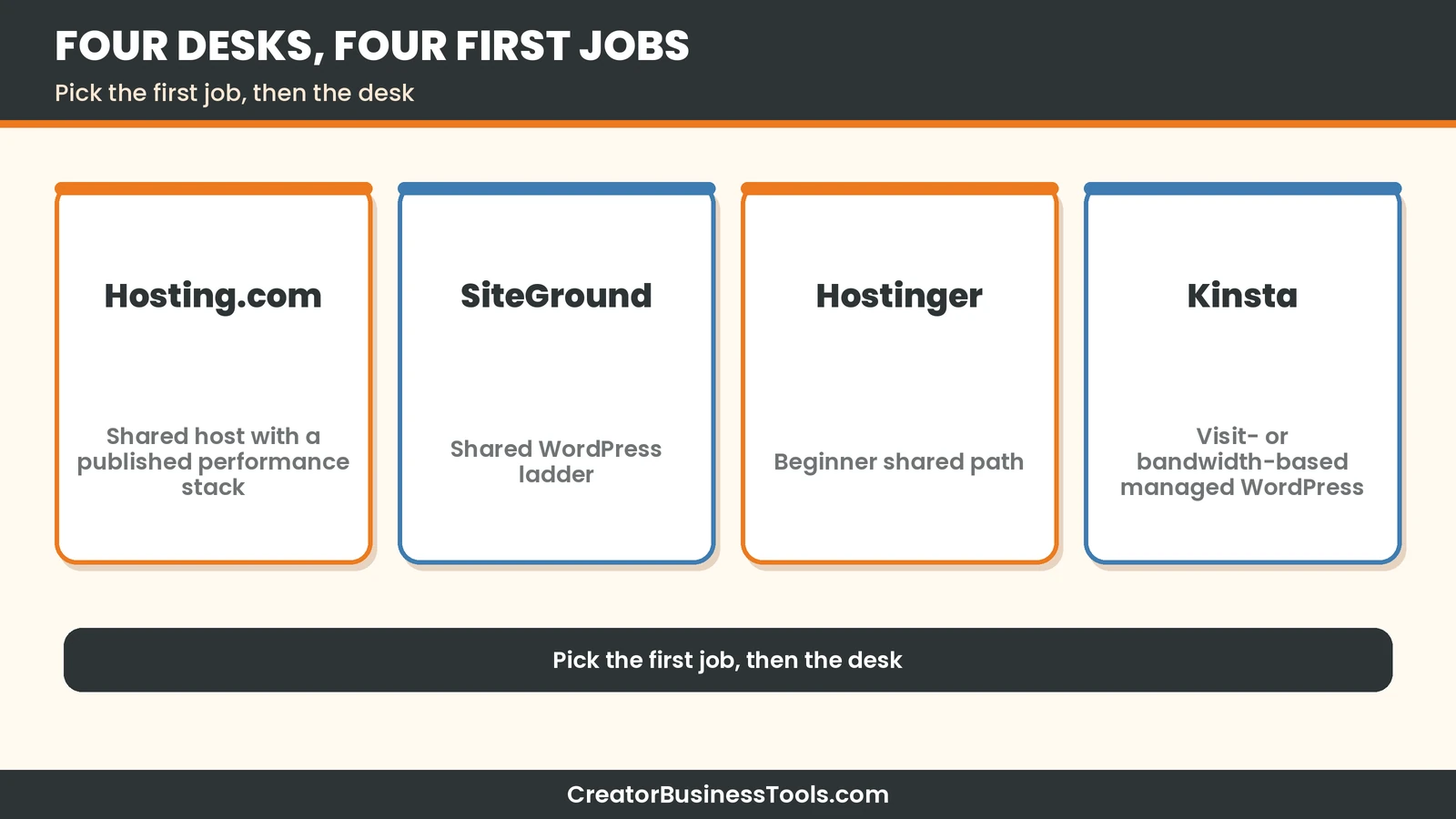
This Hosting.com review is a desk match, not a trophy. Hosting.com is the shared host, formerly A2 Hosting, with a published LiteSpeed, NVMe, and EPYC story on the official shared plans. SiteGround is the nearby shared WordPress ladder. Hostinger is the nearby beginner path. Kinsta is the nearby managed WordPress desk.
I would start with the first job, not the homepage slogan. If I needed a shared plan with published resources, I would read Hosting.com. If I needed a first post more than a performance stack, I would not force this desk into that job. And I would not pretend this review measured speed.
FAQ
What is Hosting.com, and is it the same as A2 Hosting?
Official pages use the Hosting.com brand for the service formerly known as A2 Hosting. Official comparison materials also map older A2 plan names to the current Hosting.com ladder. Confirm the live official plan names and caps when you buy.
Is Hosting.com fast enough for a blog?
Official pages describe LiteSpeed, NVMe, and AMD EPYC on the shared plans, and they publish resource figures on a comparison page. I did not run a speed test, so I cannot give you a lab number for your theme. “Fast enough” still depends on the site you publish.
Does Hosting.com have a free plan?
No lasting official free plan appeared on the public pricing pages I read. Official shared plans start on a paid Starter, Pro, or Max rung. Confirm the official standard or renewal rate before you budget.
Should a new blogger pick SiteGround or Hostinger instead?
They can, if you want a simple shared WordPress ladder or the shortest first-post path. See the published SiteGround review and How to Start a Blog with Hostinger. Hosting.com fits when you want that official shared performance stack and published resource figures.
Get the free Hosting.com blog-host checklist
Free checklist: Get our free Hosting.com Blog-Host Checklist — for reading official Hosting.com plan caps, comparing a shared WordPress ladder, and confirming the ongoing rate before you launch. Contact us to request a copy.
Conclusion: a Hosting.com review verdict
This Hosting.com review (formerly A2 Hosting) comes down to the first question you want to answer. If you want a shared host with a published LiteSpeed, NVMe, and EPYC stack, start with Hosting.com, read the official Starter-to-Max caps, and confirm the official standard or renewal rate. If you want a simpler first-post path or a visit-based managed desk, look at SiteGround, Hostinger, or Kinsta instead. I did not measure speed for this review. Confirm official limits, budget the ongoing plan, and let the first published posts tell you whether the desk fits.